.png)
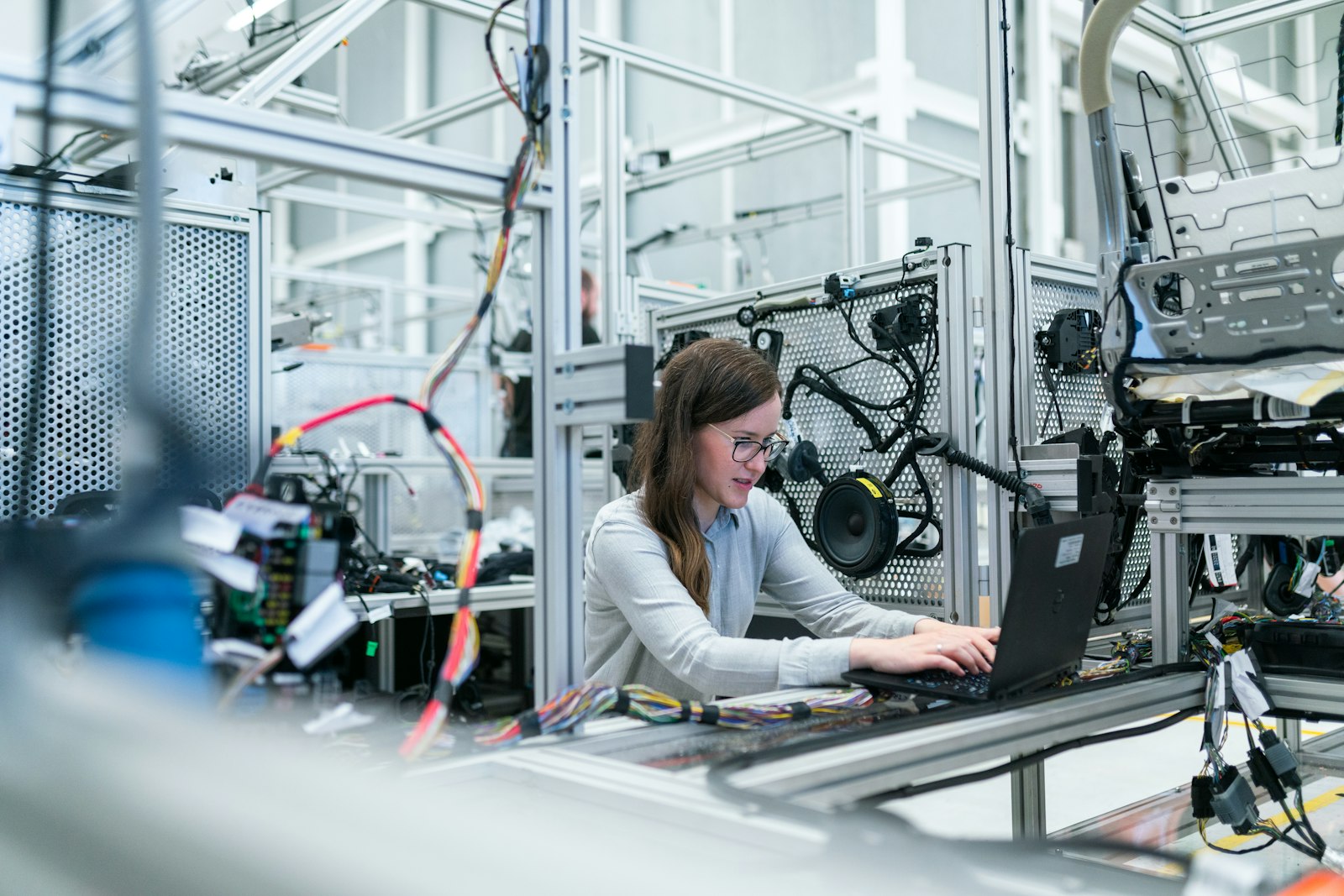
Establishment: Established in the academic year 2010 with an average annual intake of 30 undergraduate students.
Offerings:Offers B.E. (Mechanical Engineering) and M.E. (Manufacturing Engineering) programs, both affiliated with Anna University Chennai and approved by AICTE. A proposal for a Centre of Research recognized by Anna University is in development.
Facilities:Housed in a sprawling wing equipped with modern laboratories, lecture halls, drawing halls, a seminar hall, and a department library. Classrooms and seminar halls utilize OHP/LCD projectors.
Faculty: A dedicated team of qualified post-graduate faculty members (M.E and Ph.D. qualifications) who are actively involved in research and publications.
Curriculum: Aims to provide a comprehensive undergraduate experience covering core topics like fluid and solid mechanics, thermodynamics, CAD, CIM, and more, blending engineering science with humanities.
Focus: Emphasizes real-time projects for final year students (UG and PG), aligning with the motto "to live to learn; learn to serve".
To provide broad-based education and training in Mechanical Engineering and its applications to enable the graduates to meet the rapidly changing needs in industry, academia and society.
To Impart high quality technical education and training with an emphasis on human and social values.To equip the students to face future technology and global changes.To create, explore, and develop innovations in mechanical engineering research.
To equip students with a strong foundation in mathematical, scientific, and fundamental engineering principles.
To prepare students to adapt to rapid technological changes using core Mechanical Engineering knowledge.
To enable students to develop and apply their knowledge and skills across various relevant disciplines.
To in still essential soft skills, including effective communication, strong ethical values, and the ability to work collaboratively within a team environment.
To cultivate self-learning abilities in students, empowering them to continuously strengthen their knowledge and skills throughout their careers.
Engineering Knowledge: Apply core knowledge of mathematics, science, engineering fundamentals, and specialized engineering principles to solve complex problems.
Problem Analysis:Effectively identify, formulate, and analyse complex engineering problems to derive substantiated conclusions.
Design & Development of solutions:Engineer solutions and design system components while prioritizing public health, safety, and cultural, societal, and environmental needs.
Conduct Investigations of Complex Problems: Utilize research methods, knowledge interpretation, data analysis, and information synthesis to provide valid conclusions.
Modern Tool Usage: Select, create, and apply appropriate techniques, resources, and modern engineering and IT tools relevant to their practice.
The Engineer and Society: Apply contextual reasoning to assess and address societal, health, safety, legal, and cultural issues inherent in professional engineering practice.
Environment & Sustainability:Understand the impact of engineering solutions within societal and environmental contexts to promote sustainable development.
Ethics:Adhere to ethical principles, responsibilities, and professional norms of engineering practice.
Individual and team work: Function effectively both individually and as a leader within diverse and multidisciplinary teams.
Communication: Communicate complex engineering activities clearly to both the engineering community and the general public through effective reports, design documentation, presentations, and instructions.
Project management and finance:: Demonstrate a solid understanding of engineering and management principles within multidisciplinary environments.
Life-long learning: Engage in independent and continuous learning to adapt to rapid technological changes throughout their careers.
Apply acquired Mechanical Engineering knowledge to the design, development, and manufacture of engineering systems.
Utilize acquired knowledge to investigate research-oriented problems in mechanical engineering, considering environmental and social impacts.
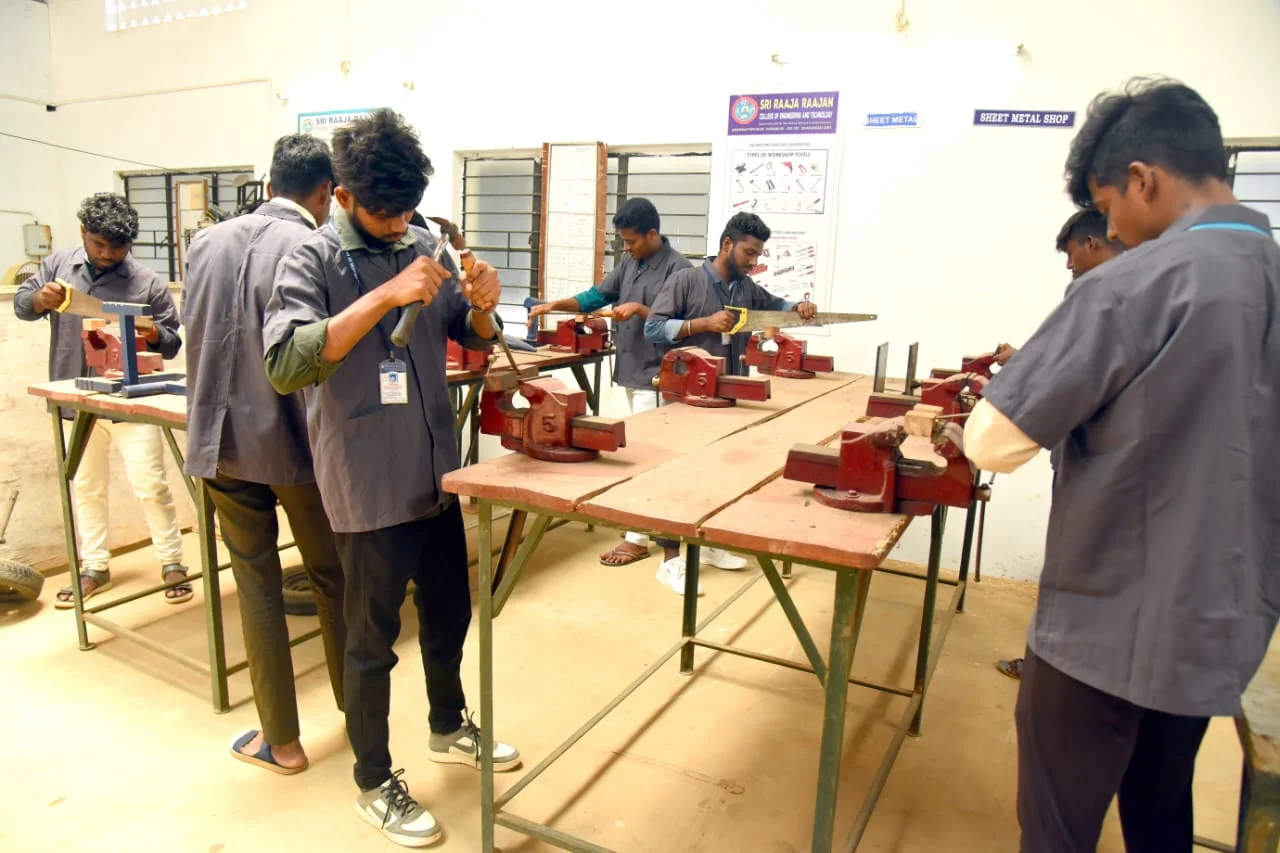
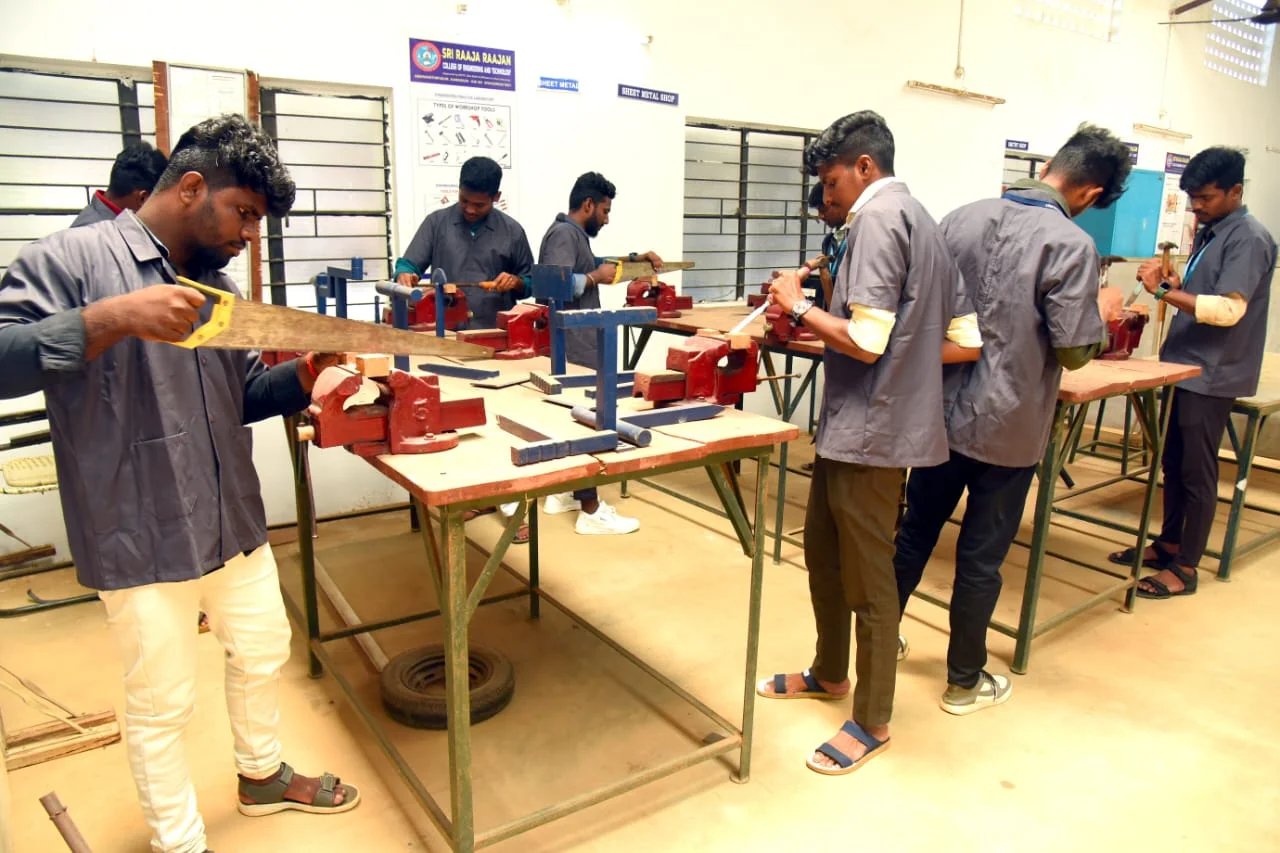
SolidWorks, A centralized facility offering hands-on training in fundamental manufacturing processes such as welding, sheet metal work, foundry, carpentry, plumbing, and fitting, familiarizing students with basic tools and equipment.
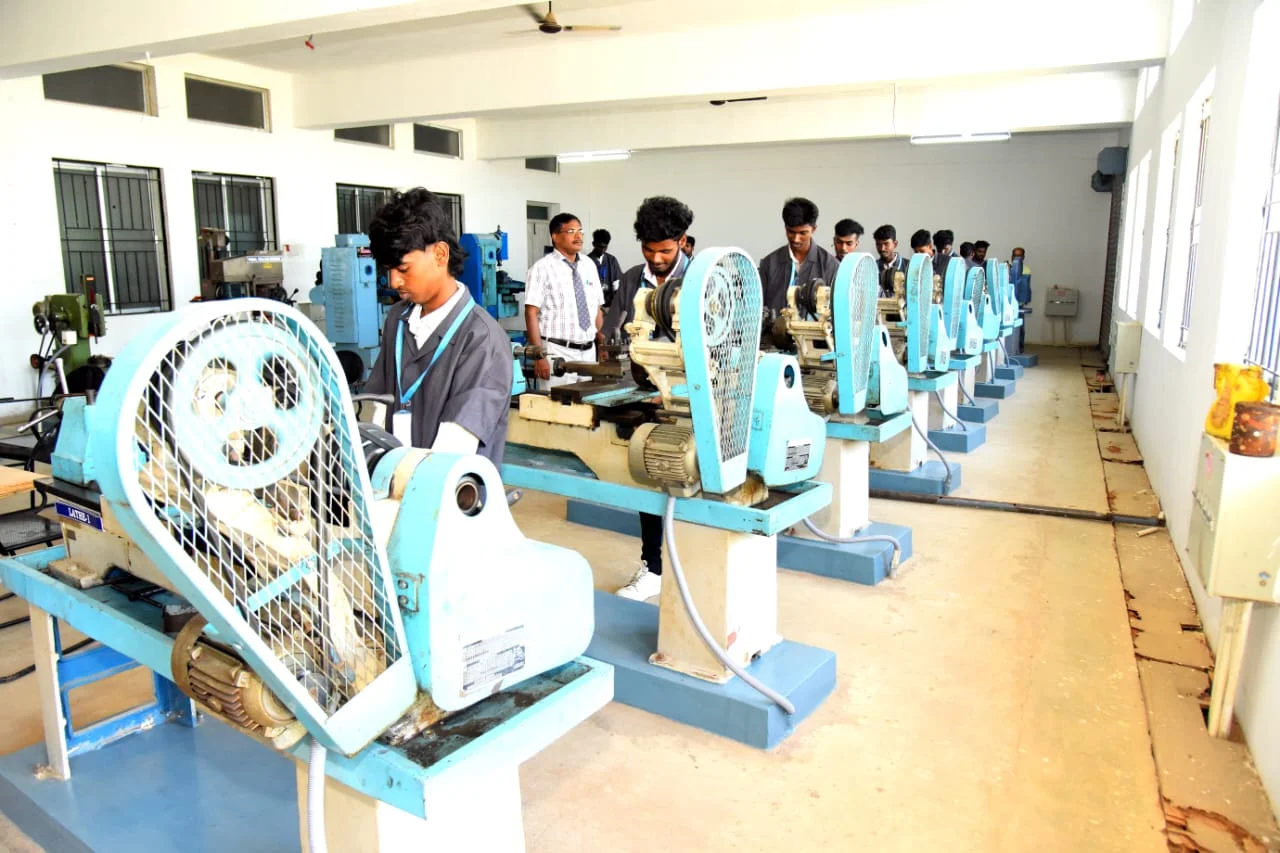
Equipped with various machineries, this lab provides students with practical knowledge and hands-on experience related to modern industrial manufacturing processes.
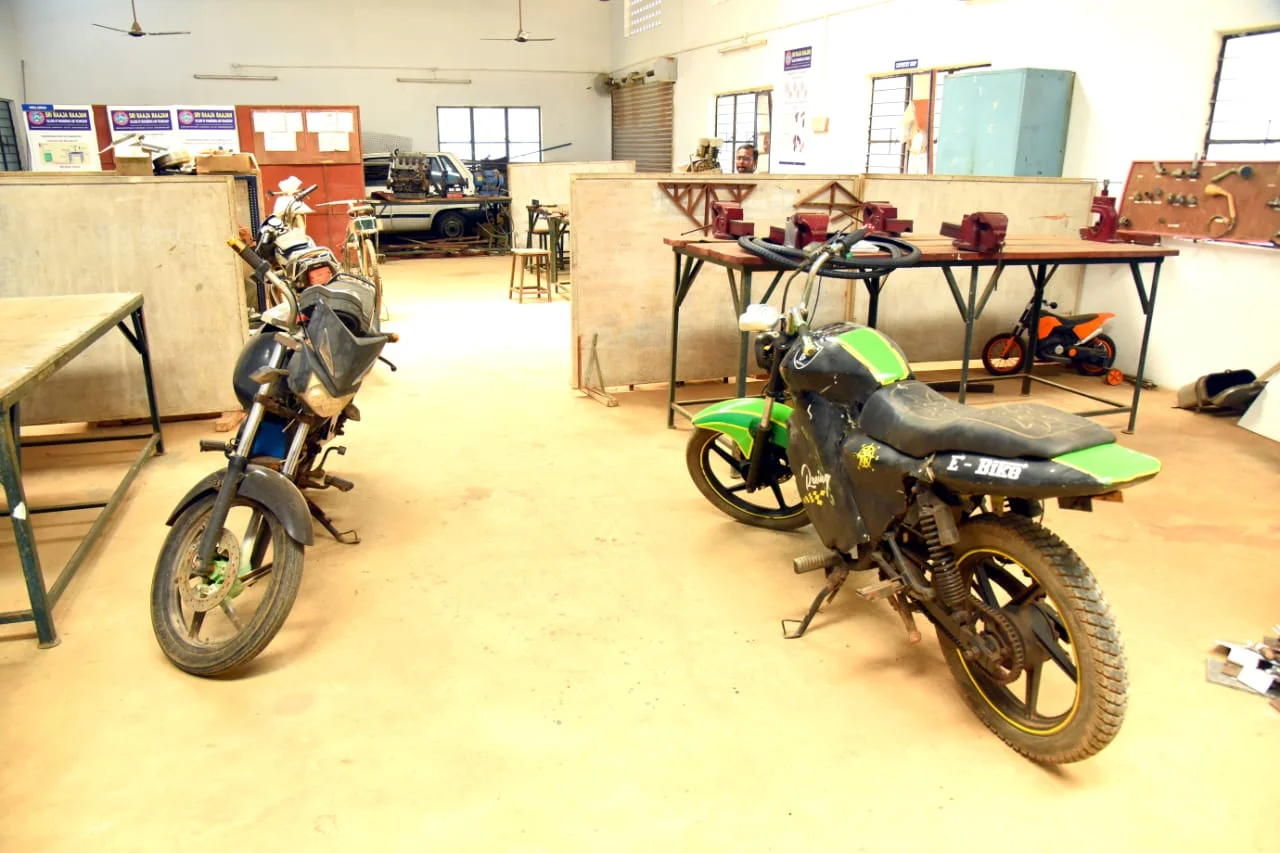
Focused on combustion theory and IC engines, this lab uses various components, cut-section models, and experimental setups (varying fuel types, cylinder counts, and loading) to analyse engine performance.
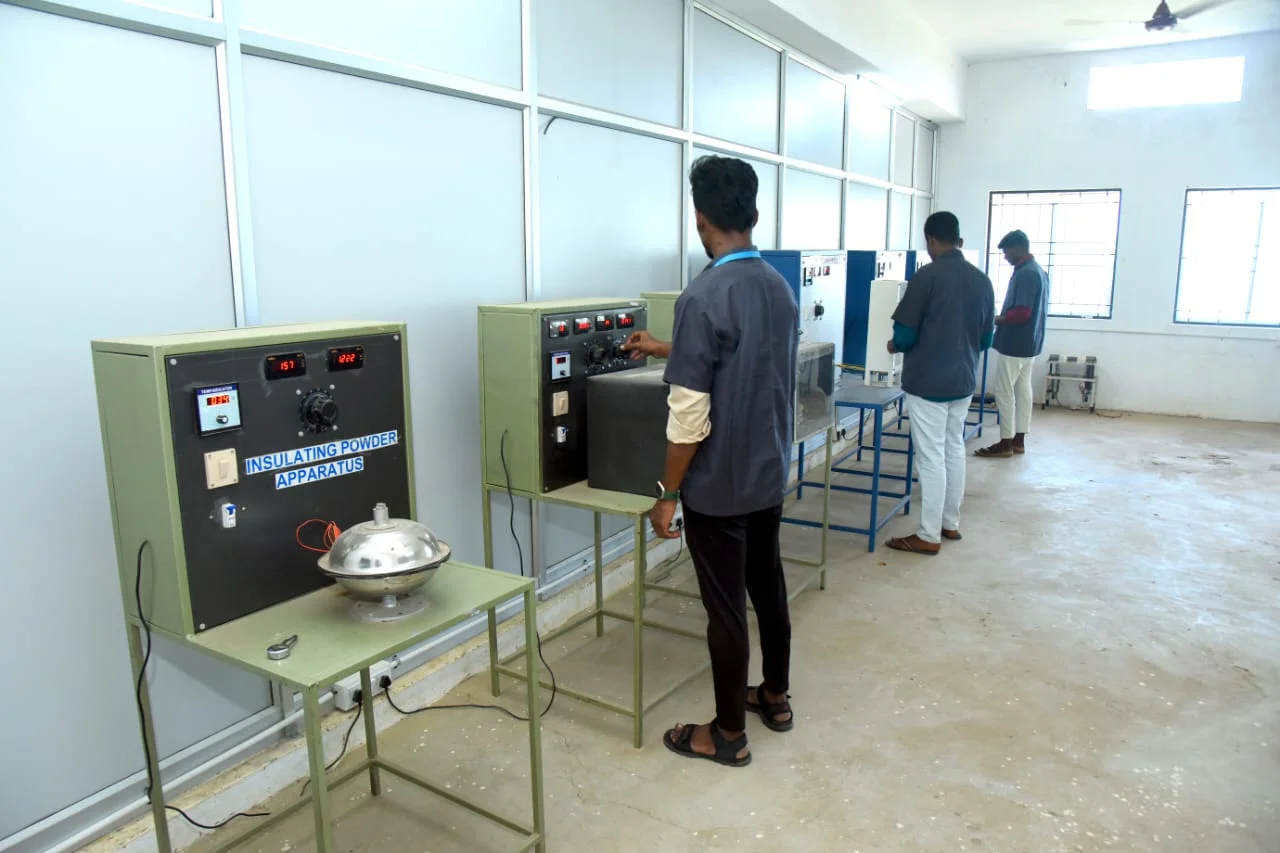
Facilitates the understanding of the three modes of heat transfer—conduction, convection, and radiation. The lab includes equipment like plate-type and double-pipe heat exchangers and condensation apparatus.
A central facility with high-end hardware and software for 2D and 3D drafting, modelling, analysis, and simulation. It provides a digitally integrated environment for designing, analysing, and building components.
This lab focuses on units, standards, and measurement methods. It is equipped with digital instruments (e.g., Vernier callipers, micrometres, profile projectors) for hands-on learning of linear, angular, and form measurements to achieve precise tolerances.
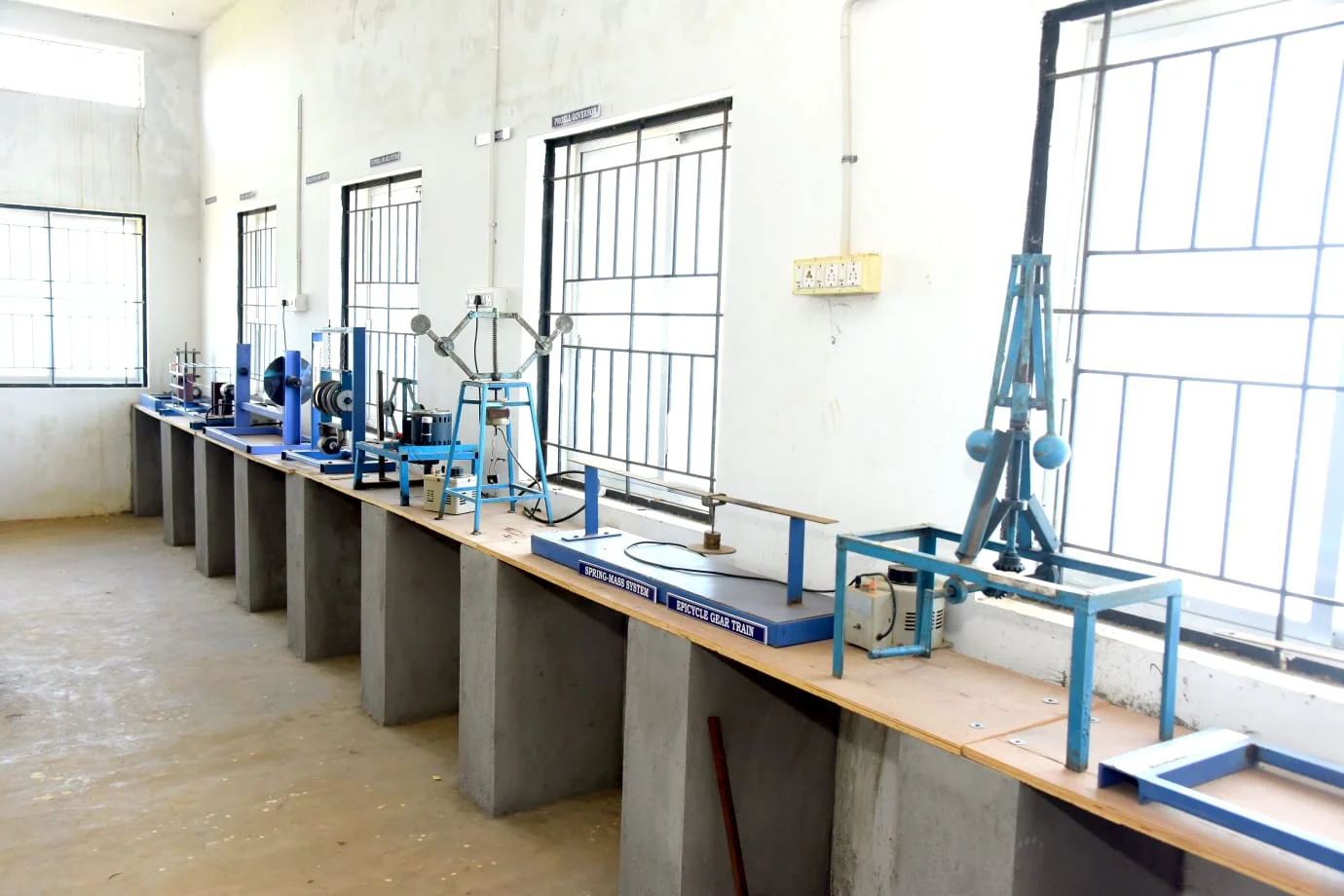
Focused on the mechanism and dynamic analysis of mechanical systems, featuring equipment such as governors, gyroscopes, dynamic balancing machines, cam analysers, and torque indicators.
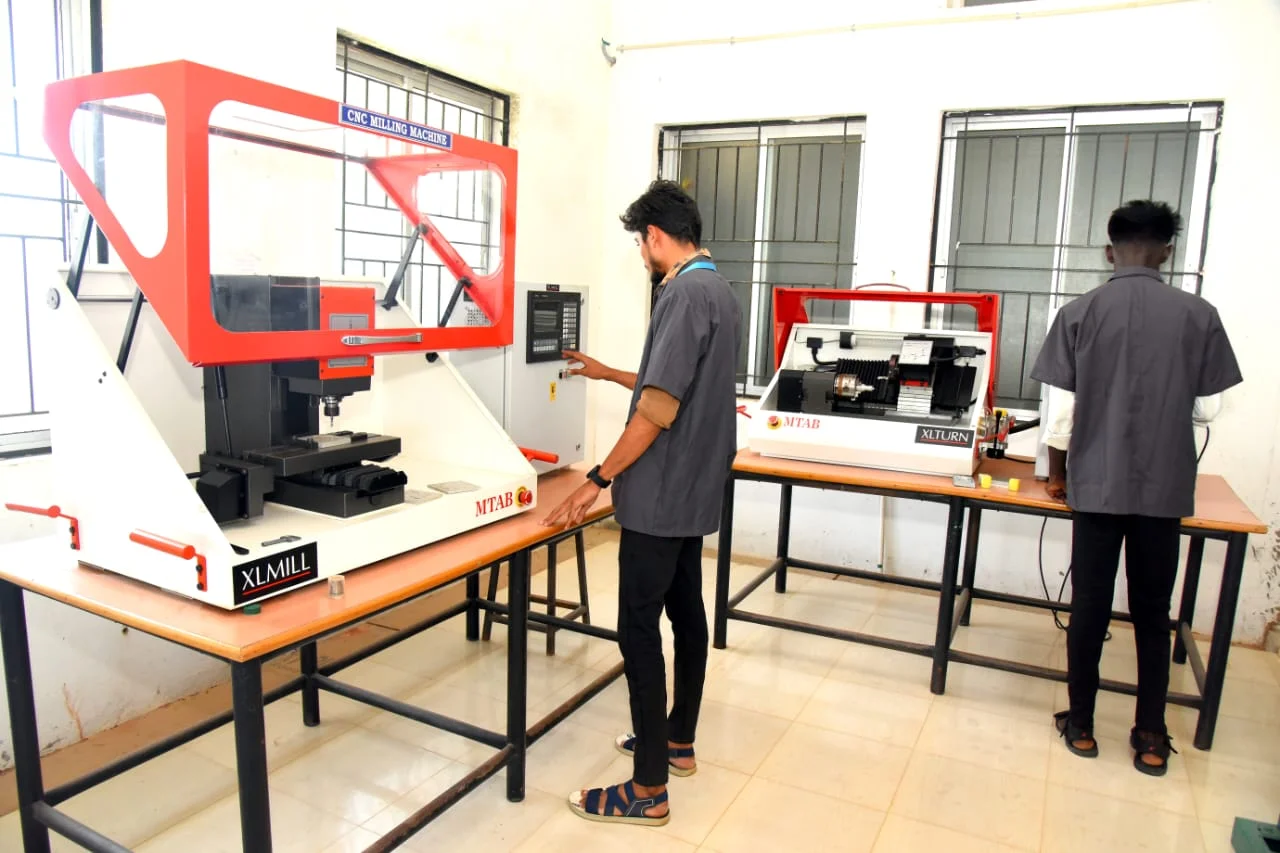
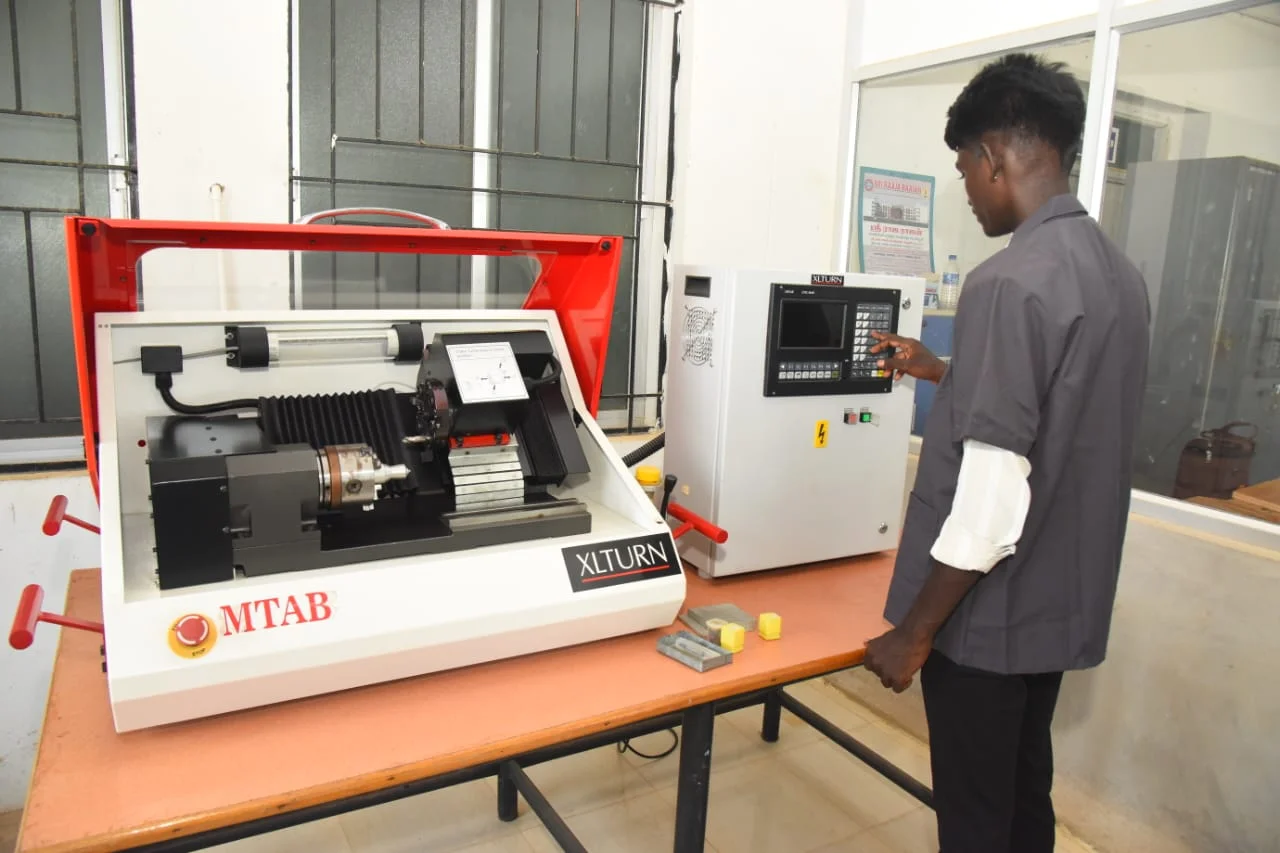
Provides training in recent manufacturing technologies using XLTURN and XLMILL Machines with FANUC integrated software, where students learn programming and manufacturing processes through CEP programs.
.webp)
A centralized facility that integrates electronic control, hydraulic, and pneumatic components with PLCs, providing knowledge about programming for industrial automation.
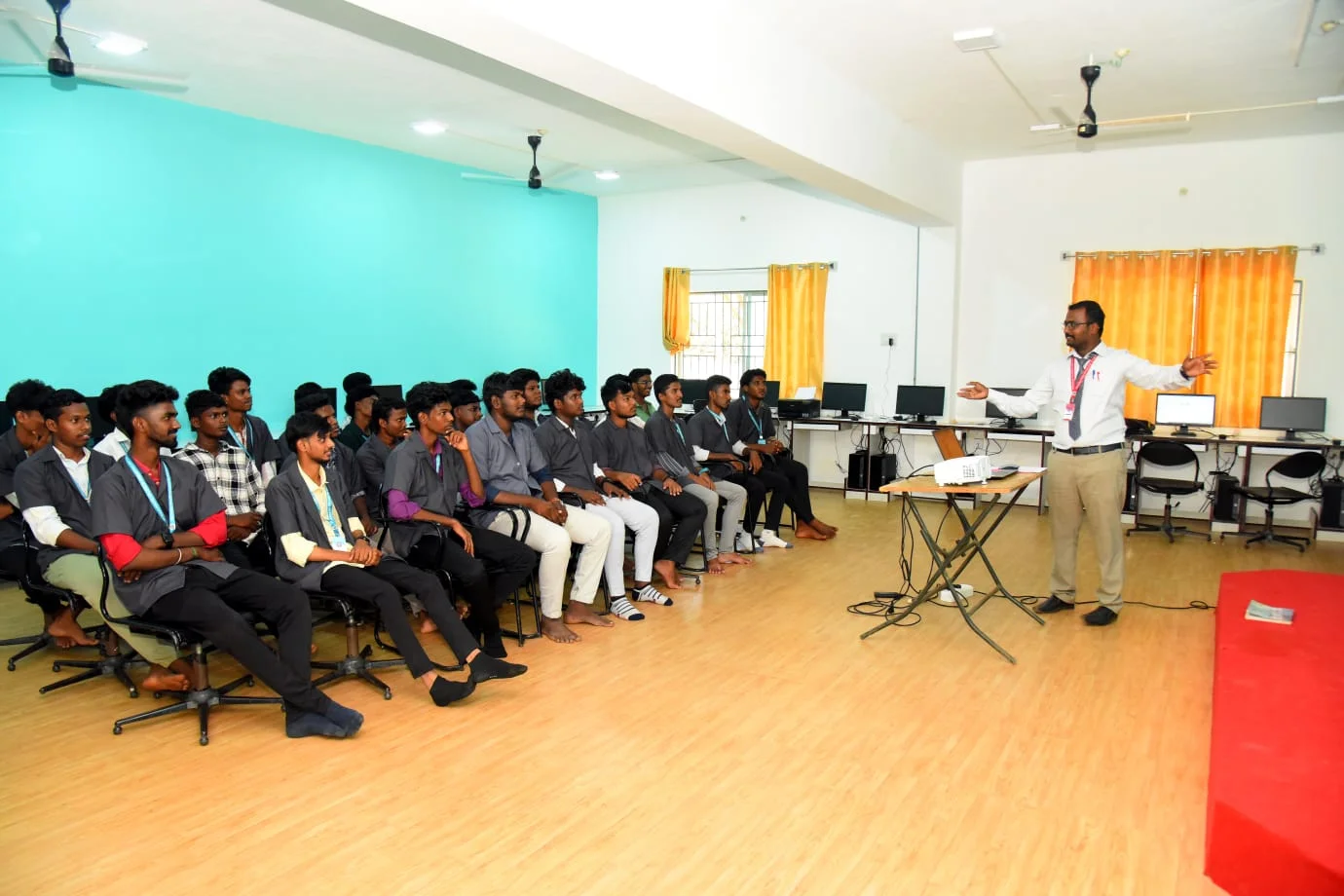
A digitally integrated environment allowing students and faculty to work with 2D and 3D drafting and modelling packages to design, analyse, and draft components.
Dedicated and qualified faculty with academic and industry experience
Faculty names and detailed profiles will be updated. Contact the department for current staff information.
Mechanical students undergo practical training in workshops, CAD labs, and manufacturing units. Campus drives connect graduates with automobile, manufacturing, and core engineering firms.
Technical symposium on Advanced Manufacturing Technologies
Student project on Solar-powered water heating system
Industrial visit to automobile manufacturing plant
Academic collaborations with industry partners for internships, projects, and knowledge transfer. View all MoUs →
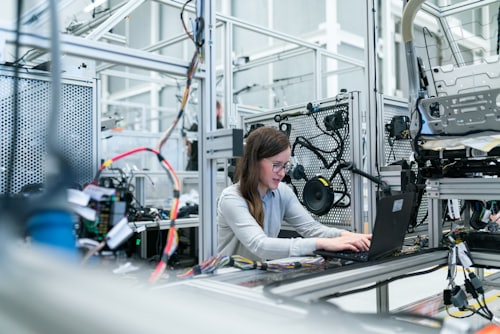
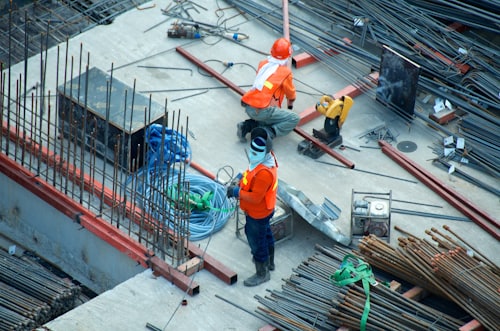

60 seats — Design machines and systems that drive industry forward.